Off Centre | Toronto DJ School, Ableton Classes, Electronic Music Production
  • Home
  • Courses
    • DJ Programs>
      • Weekend DJ Workshop
        • DJ Courses: Level 1 - 4
          • Full DJ Program
            • DJ Camps
            • Producer Programs>
              • Ableton Live
                • Maschine
                  • Mastering
                • OC Blog
                • Gift Cards
                • Teachers
                • Community / Press
                • Contact
                Vinyl vs. Digital - The Ultimate DJ Battle 05/19/2011
                1 Comment
                 
                Ever since the abacus first clashed with the calculator, the epic battle between analog and digital has raged on with hardcore fanatics from both camps ready to tell anyone who is listening exactly why the other side is wrong. From cds to midi controllers, there is an entire universe of digital djing out there, but today we are going to specifically look at DVS (Digital Vinyl System) vinyl time code as compared to its traditional analog record counterpart, and the benefits and disadvantages of time code djing. Whether or not you have had experience with traditional vinyl, or not, the primary reason for investing in a DVS is to get that traditional vinyl feel. So is it the same? Is it superior? There are a few criteria that come to mind:

                Functionality

                Picture
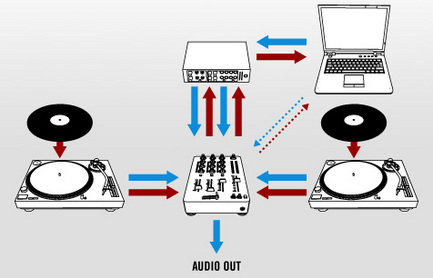
                How different is using time code vinyl compared to traditional vinyl? Not much really. Once you connect the usb interface to your mixer and turntables it’s all essentially the same. The time code sits on the platter. The needle goes in the groove. You can operate the gain, eq, and all the faders on the mixer the same. Monitoring the audio signal is the same, as well as back cueing, adjusting the pitch slider, and beat matching your next track can all be done in the traditional way, as well as being controlled by the software, if you choose.

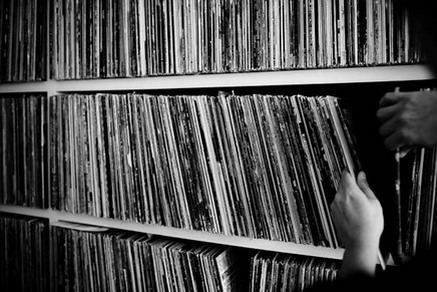
                One of the biggest functional advantages of software djing is portability. Being able to carry every record, you own in a laptop slung over your shoulder in a small bag with two time code records, and a few small pieces of equipment. But what does it take to get them in there?

                Nowadays there are a number of websites dedicated to selling high quality downloadable tracks, specifically for use by djs, and of course ripping a cd to a computer is child’s play, but getting those 12” promos archived, yet still retaining their fidelity is a little trickier. The soundcard/interfaces required for all DVS’s include built in preamps, and some of the software have a recording function, so the process is fairly easy, it is the result of the process that leaves much to be desired. Because it is a digital reproduction of the sound, it will never retain the quality of the traditional analog record. Which brings me to my next point…

                Sound Quality

                Picture
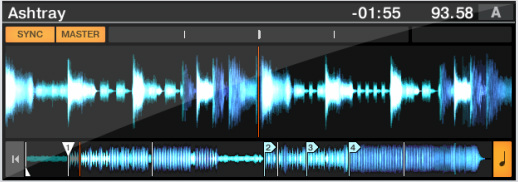
                The true test of sound quality is in the variation of the tempo/pitch of the audio. Now with traditional vinyl you can speed it up, slow it down, wind it down, break it, scratch it fast, scratch it slow, and will always retain that warm rich analog sound with no degradation of the sound. Because digital files are a non-continuous recreation of sound, the more you manipulate the sound, the more obvious the flaws are. Think of a picture on a TV, the image you see is not a complete image, it is made up of hundreds of individual pixels, that all do their little part to form an image. Digital audio files act in the same way; they
                are a series of sound pixels, if you will that each represent a micro-portion of sound. So what that means is the more you reduce the tempo/pitch of an audio file, the more detached the pixels become from one another, the more prominent the individual pixels become, creating a lo-fi granulated sound. Because of this, breaking, slow scratching, drastically, and sometimes even gradually lowering the tempo/pitch, will never compare to traditional analog vinyl.

                Now operating at faster speeds is a little different. Because the speed of the audio file is forcing the pixels closer together, as opposed to spreading them out, the sound will maintain its integrity, to a point. Scratching and play through at 0 to +10% tempo/pitch, with a DVS, is virtually identical audibly to its traditional counterpart; (depending on the quality of the audio file being used) it’s when we raise the tempo/pitch of the track that we begin to notice its fallibility. I have some audio files ripped from vinyls that begin to fail at less than a 5% raise in the tempo/pitch. The highs start to become strained, and the lows become garbled and muddy sounding. In some cases it starts to sound like a whole other song, and not in a good way. And scratching at an extremely high pitch just doesn’t sound right. It is almost like the faster the track gets, the closer the pixels get, almost to the point where they sound like they are overlapping each other. In this category, analog wins every time.                                                                                                                                                                                            

                Versatility

                Picture
                Ages ago when I first started to play with wax, and the place where you would most likely find me was at the record store spending my last dollars on the latest release from Rawkus Records, I used to dream the improbable dream, of being able to create my own records with the sounds I want on them. Being able to scratch sounds from movies, TV, remarks from a borderline racist neighbour. Well it is all possible now. Using a DAW, or recording straight to the software, bringing your sounds, your remixes, and even your own original music, into the mix is fun, easy, and seamless. And on the subject
                of seamless, looping beat matching, instant cueing, bringing up your next track, adding effects, can all be done at the touch of a button. Some hardcore vinyl enthusiasts may say that that is cheating, but the audience doesn’t care how you get the sound out, they only care if it sounds good. And taking the time and labour out of beat matching really frees you up to be more creative with your mixes.

                One other thing I really enjoyed about using a DVS, is switching back and forth from time code to traditional vinyl is as easy as flipping the input switch on the mixer.

                Art

                Picture
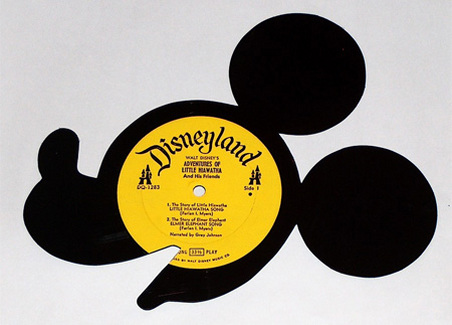
                Music is art. Turntablism is art. Djing is art. So is digital Djing less than art? Is a book written on a laptop less than a book typed on a typewriter? Is a picture designed on a computer less than a picture drawn with pencil or painted with water colours? I don’t know. It’s my opinion that digital djing is a new art form, using technology to give your listeners an experience that you couldn’t give them the traditional way. Being able to remix spontaneously, layer effects, loop, and re-loop, scratch your own voice, play your own music, instantly mixing on four decks. The possibilities are endless. And if you are doing what
                you love to do, if you are creating something totally unique from everyone else, if you are making people happy, if you are making people angry, then that’s art, and nobody can take that away from you.

                And The Winner Is…..

                You! Why take sides, embrace technology. Meld the old with the new. They both have their pros and cons, so use one to balance out the other. Why limit yourself to one genre, one colour, or one format. Once we abandon our preconceived notions, there is a world of opportunities out there, new buttons to press and different knobs to turn. And when we can finally recognize the other side for the attributes that it brings to the table, the world of Djing will be a better place.


                                                                                                                                                                                                                 -  Zeke Zelecta


                Comments

                Ian
                06/08/2011 2:30pm

                Thanks for this! I'm still trying to learn all the amazing things I can do with my TTM 57SL and regular turntables. There are some seriously great advantages, in terms of punching in loops and cues. Sure do hope to drop by this summer to get some instruction.

                Reply


                Leave a Reply

                  Archives

                  January 2012
                  October 2011
                  May 2011
                  April 2011
                  March 2011


                  Categories

                  All
                  Ableton
                  Article
                  Artist Spotlight
                  Maschine


                  RSS Feed